The 'suitcase swap' scam that's causing fear at major airports

Reprinted from MSN: Article by Daniel Monroe
Most travelers worry about delayed bags or broken zippers. Very few stop to think about something far more sinister: the possibility that the suitcase they wheel out of baggage claim isn't theirs at all, or worse, that it's been turned into a weapon against them. The so-called "suitcase swap" scam has moved well beyond isolated incidents. It now represents a sophisticated, coordinated form of airport crime that's landing innocent people in legal trouble they had nothing to do with.
Between April 2024 and April 2025, Americans lost a staggering $2.6 million to reported travel scams, and many cases go unreported because victims never realize they've been conned until it's too late. The airport, a place most people associate with routine and bureaucracy, has quietly become one of the most fertile environments for modern fraud. Understanding exactly how these schemes work is the first step toward not becoming part of that statistic.
How the Core Scam Actually Works

In a sophisticated scam, baggage handlers swap drug-filled luggage for checked bags, even switching luggage tags, and two tourists in Germany were victims in 2023 and spent 24 hours in prison. The mechanics are deliberately simple.
A bag that looks nearly identical to yours gets placed on the same carousel. The tags are swapped beforehand.
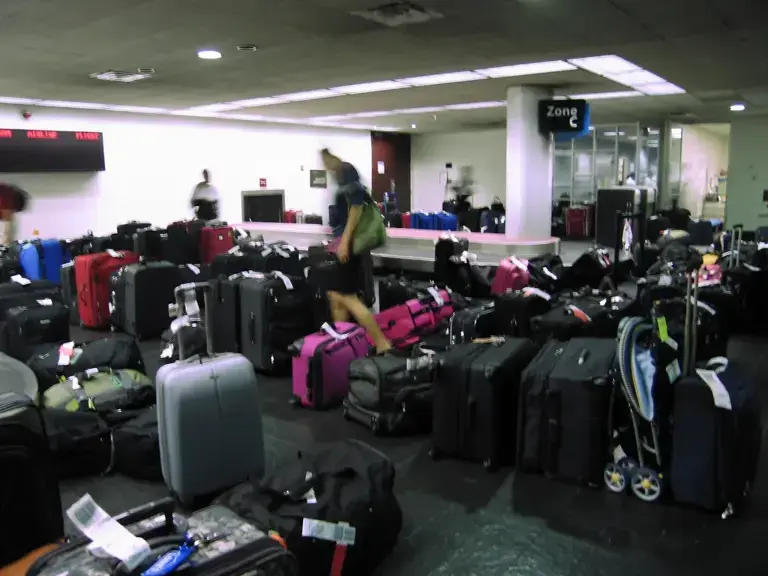
You claim the bag thinking it's yours, go through customs, and suddenly you're in handcuffs trying to explain something you didn't do. In these cases, the real criminals walk away while innocent travelers face serious legal consequences.
The cruelty of the scheme is that it requires almost no confrontation. The criminal never has to be anywhere near the moment things go wrong for the victim.
The Role of Insider Access

Although airline baggage handlers do not have a reason to open checked baggage, they have a brief but uninterrupted opportunity to rifle through baggage during aircraft loading. TSA officials believe that airline employees are responsible for a large percentage of thefts.
This insider element is what makes the scam particularly difficult to combat. Security checkpoints exist to screen passengers, not the workers moving luggage in restricted areas.
Airports worldwide have reported insider thefts where baggage handlers quietly remove valuables or even entire suitcases. A traveler at Fort Lauderdale-Hollywood used an AirTag to trace his "missing" bag straight to an airport employee's home.
Similar incidents have surfaced in Spain and the Philippines, showing just how deep these schemes can go. When the threat comes from someone wearing a uniform and carrying authorized access credentials, the usual defenses simply don't apply.
The Bullet-Planting Variation and Other Contraband Schemes

In 2015, an extortion plot came to light in the Philippines after security agents at Manila International Airport were found to have been planting bullets in innocent passengers' bags. During the tactic, passengers found to be in possession of the bullets were forced to pay money before being freed.
This variant isn't about drugs at all. It's pure extortion, using the threat of legal consequences as leverage.
It's a level of exploitation that's genuinely hard to wrap your head around.
Drugs are sometimes smuggled in unsuspecting passengers' checked bags by airline workers hoping to pass them off to another worker at the destination city. If found by a drug-sniffing dog, however, the owner of the bag could get in trouble, not the airline staff.
The passenger becomes an unwitting courier, completely unaware of what's traveling beneath their clothes and toiletries. It's a level of exploitation that's genuinely hard to wrap your head around.
How Widespread Is the Problem?
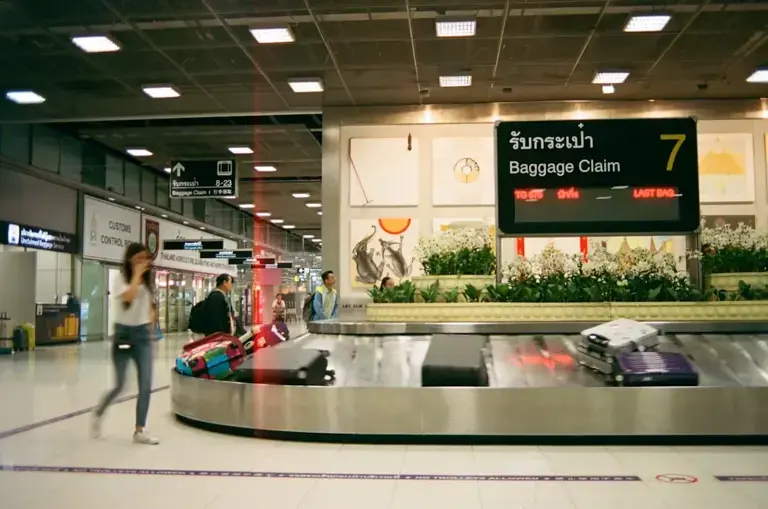
From a low in 2011 of 97 reported incidences of bag theft, the numbers soared to a record high of 477 cases. That's just at Seattle's Sea-Tac Airport alone, and similar patterns have emerged at airports worldwide, from Germany to Miami. Those figures reflect only confirmed, reported incidents. The real numbers are likely considerably higher, since many victims either don't notice the swap until days later or are too disoriented to file a timely report. In 2024, airlines and airports mishandled around 33.4 million bags worldwide, costing the industry an estimated 5 billion dollars in recovery, compensation, and logistics. Lost or stolen bags made up about 8 percent of those mishandled cases, while damaged or pilfered luggage climbed to 18 percent. That climb in pilfered luggage is particularly telling. It suggests opportunistic theft is growing as a share of the overall problem, not shrinking.
The Discarded Luggage Tag Fraud
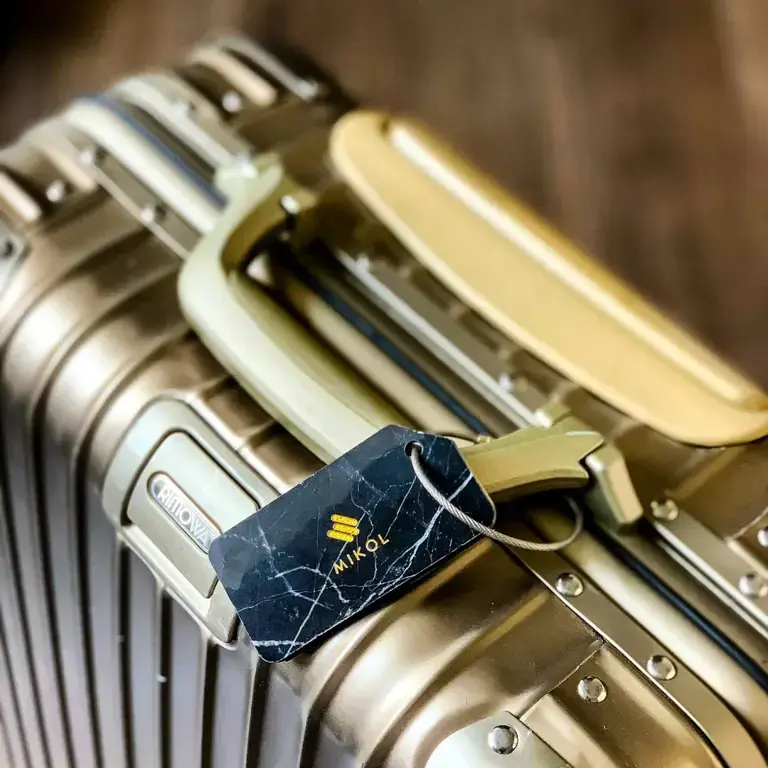
A baggage tag contains your name, flight numbers, airline information, baggage number, and sometimes membership numbers. Scammers can then use your name to create a fake email address and, after making up other contact information, can submit a claim to an airline for a lost, delayed, or damaged bag to get money.
Most travelers tear off those tags and toss them in the nearest bin without a second thought. That casual habit is exactly what this branch of the scam depends on.
A new luggage tag scam is spreading in airports across the United States in 2025, with a Delta Air Lines baggage claims manager warning travelers to be extra careful. Victims who have had a tag stolen could run into issues if they need to file their own legitimate claim for luggage issues, leaving the airline's baggage claim department to decide which claim is real and which is fake.
In other words, the fraud doesn't just steal from airlines. It makes life harder for the very travelers who genuinely need help.
The "Accidental" Swap at Baggage Carousels

Thieves have gotten bolder with "accidental" bag swaps, intentionally taking a suitcase that looks like yours, then claiming confusion later. Some even fill a similar bag with cheap items and switch it before you notice.
At busy hubs like JFK and Dubai, authorities say this scam has become surprisingly common. The cover story of innocent confusion buys the thief time to disappear before anyone figures out what happened.
Organized groups target busy carousels, knowing most travelers don't notice until it's too late. In one case at LAX, a woman used an AirTag to track her stolen suitcase to another terminal.
These aren't opportunistic lone actors. Coordinated groups operate these schemes with practiced efficiency, reading the flow of a busy carousel the same way a pickpocket reads a crowded street.
Fake Porters and the Trust Trap

In crowded international terminals, fake porters pose as airport staff and offer to "help" with luggage. They seem friendly until they vanish with your bag or demand an outrageous tip.
Some even wear imitation badges or uniforms to appear official. Airports in Delhi, Manila, and Cairo have all issued warnings about these impostors working the arrival zones.
At some hubs, luggage helpers are linked to up to roughly three in ten thefts and overcharging complaints. The scam works because airports are deliberately designed to feel orderly and official.
A confident person in a vest carrying a clipboard reads as trustworthy, especially to a traveler who just stepped off a nine-hour flight and is still recalibrating to local time. That misplaced trust is the vulnerability these scammers bank on.
How Technology Is Changing Both Sides of the Problem
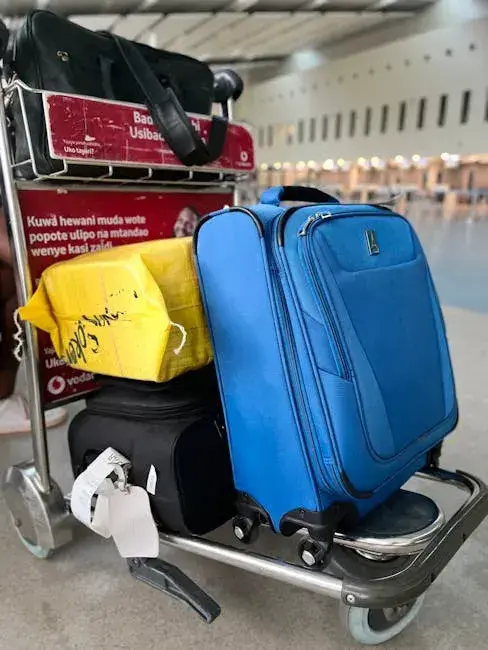
Scammers now scan luggage barcodes or boarding pass QR codes, sometimes just from a photo, to pull your name, itinerary, or frequent flyer info. Some even send fake "lost bag" texts that lead to phishing links. The physical swap is only one layer of a broader ecosystem of airport fraud.
Digital manipulation now runs parallel to the hands-on theft. Travelers are fighting back with technology too, though.
Hiding a tracker like an AirTag or Tile in checked luggage is the simplest way to follow a bag's path. According to an AirAdvisor global study, London Heathrow ranks number one for the most lawless baggage claim worldwide, making tracking devices especially practical for passengers passing through major international hubs.
What You Can Actually Do to Protect Yourself

Some airports in Japan and other countries have already started using secure disposal bins for bag tags near baggage claim exits. These bins make it harder for scammers to get their hands on discarded tags.
U.S. airports are now discussing whether to add similar bins, but no official changes have been made yet. Until those measures are standard, the responsibility falls mostly on individual travelers.
Don't throw your tag away at the airport or even in your hotel room where someone could access it. Keep the tag until you are home and dispose of it by shredding it or cutting it up.
Similarly, boarding passes that contain personal information should also be disposed of at home. Beyond tags, marking your bag in a way that's obvious and hard to duplicate, such as using a bright strap, patterned tag, or colored duct tape, and adding your name inside the bag in case labels are removed, significantly reduces your chances of being caught in a swap scheme.
The harder you make your bag to replicate or quietly replace, the less appealing a target it becomes.


Comments